


Canadian Wildfire Smoke in the Finger Lakes: What Does It Mean for Honey Bees?
Hi Sweet Friends,
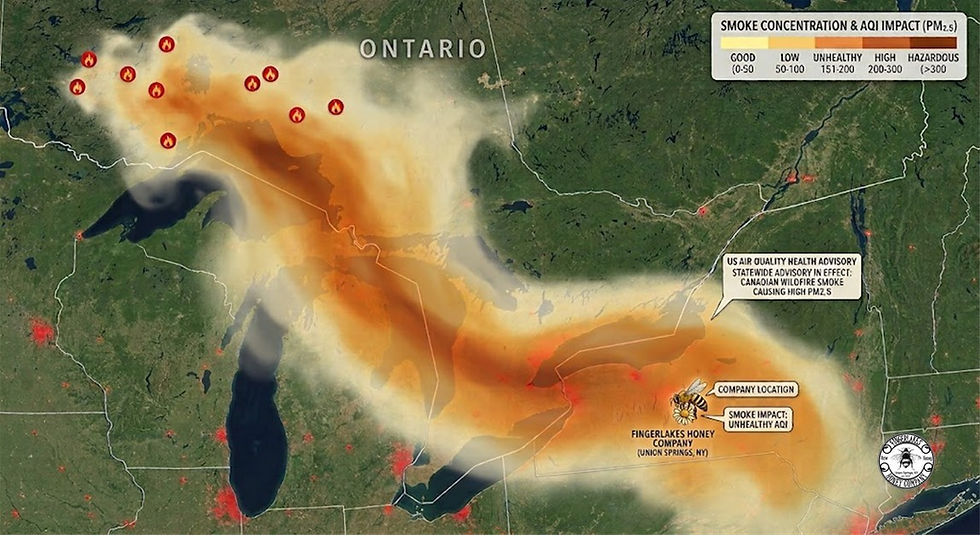
If you live in the Finger Lakes (or in the upper US and Canada), chances are you noticed it the moment you stepped outside yesterday and today.
The air smells like a campfire. The sky looks hazy. The sun appears muted behind a veil of smoke.
Like many of you, we immediately started thinking about the air quality and how it affects our health. But then another question popped into our head...
If beekeepers use smoke to calm honey bees, what happens when the smoke is coming from hundreds of miles away?
It's a great question—and the answer is more interesting than you might think!
We don't usually post two blogs in a week, but we felt this was a timely one. So grab your mask, turn on your air purifiers, and read all about it.
Why Do Beekeepers Use a Smoker?
One of the most recognizable tools in beekeeping is the smoker. Before opening a hive, a beekeeper gently puffs cool smoke near the entrance and under the lid.
Contrary to what many people think, the smoke doesn't put the bees to sleep.
Instead, it triggers a natural survival instinct.
In the wild, smoke can signal a nearby forest fire. Honey bees respond by filling up on honey in case they need to abandon their home. At the same time, the smoke helps mask the alarm pheromones bees use to alert each other to danger. With those chemical signals interrupted, the colony becomes less defensive, allowing the beekeeper to inspect the hive with less stress for everyone involved.
The key, however, is that a beekeeper's smoker is used for just a few minutes and in a very controlled way.

Is Wildfire Smoke the Same Thing?
Not exactly.
Smoke drifting into the Finger Lakes from Canadian wildfires is very different from the brief puffs of cool smoke a beekeeper uses.
Instead of lasting a few minutes, wildfire smoke can linger for hours or even days. Rather than being concentrated at the hive entrance, it's spread throughout the environment. It also contains tiny particles and gases that affect the entire ecosystem—not just honey bees.
So while the bees recognize that something unusual is happening, they don't simply stay "calm" the whole time.
How Does Canadian Wildfire Smoke Affect Honey Bees?
Researchers studying wildfire smoke have observed several changes in bee behavior.
🐝 Bees often forage less.
When the air is smoky and visibility is poor, many bees simply make fewer trips to gather nectar and pollen. Some leave the hive later in the day, return earlier, or stay inside altogether until conditions improve.
Think about it this way: if you had to drive through thick fog all day, you'd probably decide some trips could wait. Bees make similar decisions when the environment becomes more challenging.
🌼 Finding flowers becomes harder.
Honey bees rely on both vision and scent to locate flowers.
Heavy smoke can reduce visibility and may also interfere with the way floral scents travel through the air, making it more difficult for bees to locate food sources efficiently.
☀️ Less sunlight can affect plants, too.
Dense smoke blocks some sunlight from reaching the ground.
Since plants depend on sunlight for photosynthesis, prolonged smoky conditions can reduce nectar production in some flowering plants. That means there may simply be less food available for pollinators if smoky conditions persist.
🐝 Bees may stay closer to home.
Just as people often choose to stay indoors during poor air quality, bees sometimes reduce their activity until conditions improve. Healthy colonies are surprisingly good at adapting to short-term environmental changes.
Can Wildfire Smoke Harm the Hive?
The good news is that healthy honey bee colonies are remarkably resilient.
Worker bees constantly regulate the hive's temperature and ventilation by fanning their wings, helping maintain a stable environment inside the colony.
A day or two of smoky conditions is not generally expected to cause lasting harm to a healthy hive.
However, prolonged periods of heavy smoke can become more stressful. If bees are unable to forage regularly for several days, the colony may collect less nectar and pollen, slow brood production, and produce less honey.
The greatest concern isn't usually the smoke itself—it's the reduced opportunity to gather the resources the colony needs.
What About Other Pollinators?
Honey bees aren't the only insects affected.
Bumble bees, butterflies, native bees, and many other pollinators may also become less active during periods of heavy wildfire smoke. When fewer pollinators are visiting flowers, pollination can temporarily decrease as well.
Fortunately, once skies clear, most pollinators resume their normal activities.

What We're Watching at Fingerlakes Honey Company
As beekeepers, we'll be keeping a close eye on our colonies while this smoky weather continues...if we dare to go outside, that is!
We hope to be watching to see whether foraging activity slows, if fewer bees are flying during the day, and how quickly normal activity resumes once the air clears.
Nature is incredibly adaptable, and honey bees have survived everything from harsh winters to hurricanes to wildfires over thousands of years. While smoky skies certainly create challenges, healthy colonies are well-equipped to handle short-term environmental changes.
A Reminder for Our Readers
If you're spending time outdoors today, pay attention to local air quality advisories and take precautions if needed—especially if you have asthma, mcas. allergies, or other respiratory conditions.
And if you happen to notice fewer bees visiting your flowers today, don't worry. They're likely doing exactly what nature has taught them to do: conserving energy and waiting for better flying conditions.
Sometimes the smartest thing a bee can do... is stay home.
Have You Noticed the Smoke?
Are you in the Finger Lakes or another area affected by the Canadian wildfire smoke?
Have you noticed fewer bees, butterflies, or other pollinators in your garden today?
We'd love to hear what you're seeing! Share your observations in the comments below—it's always fascinating to compare what nature is doing in different parts of the region.
Until Next Time- Stay Sweet!
Tom and Stacie

Tom and Stacie, are co-owners of Fingerlakes Honey Company located in the bee-utiful Finger Lakes region of New York State. When they are not tending to all things bees, they enjoy spending time with their grown children, their dog, and lots of chickens on their homestead. They love learning more about the bees they foster and helping others to learn more about them as well.


Comments