


The Vital Role of Honey Bees in Celebrating Earth Day 2026
Updated: 6 days ago
Happy Earth Day, Sweet Friends!

As we celebrate our planet, it is the perfect time to shine a light on the tiny, winged wonders that keep our ecosystems humming. While Earth Day 2026 focuses on the theme "Our Power, Our Planet," there is perhaps no better example of "power in numbers" than the honey bee.
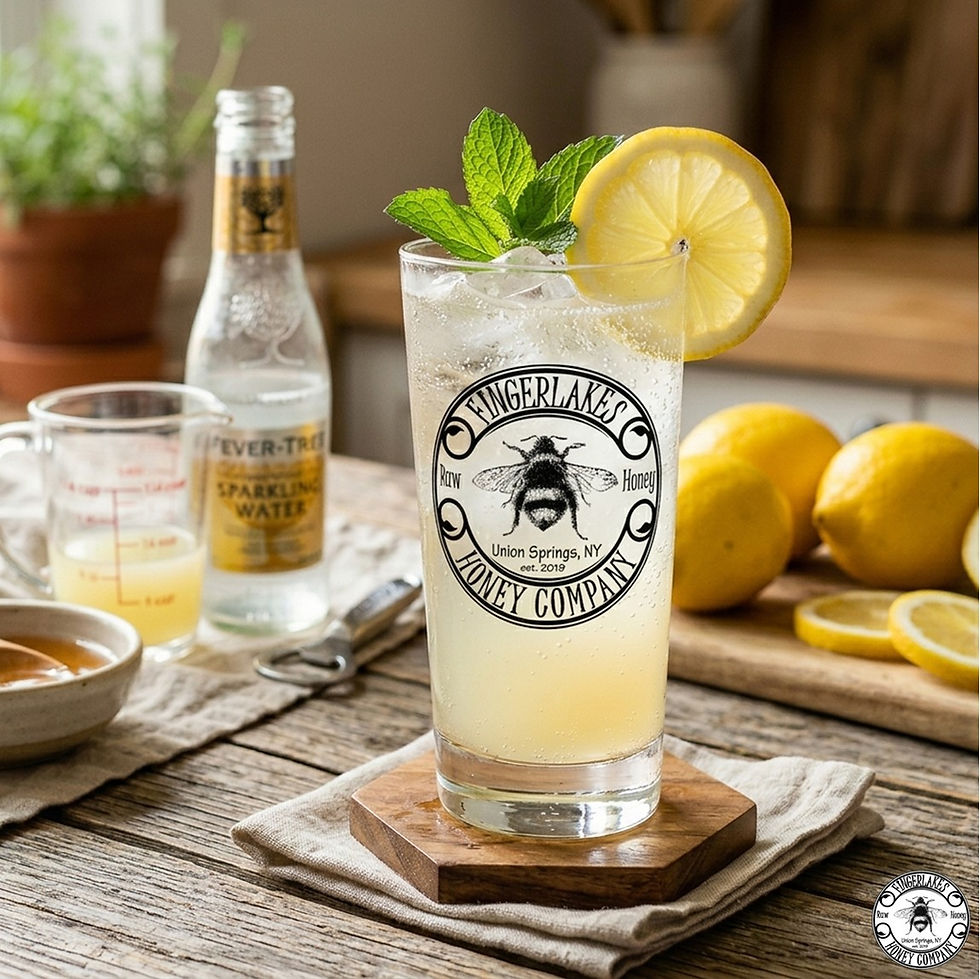
From the food on your plate to the flowers in your garden, honey bees are the silent engines of our environment. So grab your Honey Bee Lemon Fizz and take a peek at why these pollinators are the true VIPs (Very Important Pollinators) of the natural world.

The Buzz on the Business: Honey Bee Facts
When we talk about honey bees, we aren’t just talking about honey. We’re talking about one of the most scientifically fascinating creatures on Earth.
Super Senses: Honey bees have five eyes—two large compound eyes for movement and three smaller "ocelli" eyes on top of their heads to detect light. They also have a sense of smell that is roughly 50 times more powerful than a dog's, allowing them to find nectar from miles away.
Ultraviolet Vision: While bees are "red-blind" (red looks like black to them), they can see ultraviolet light. Many flowers have secret UV patterns, like landing strips, that guide bees directly to the nectar!

The "Scout" Life: A single honey bee may visit up to 5,000 flowers in a single day. To produce just one pound of honey, a colony's foragers must fly a combined 55,000 miles.
Tiny Power Naps: Scientists have confirmed that bees do sleep! They sleep between 5 and 8 hours a day, often in short bursts, and older foragers have even been observed "napping" together by holding onto each other’s legs.

Why Every Third Bite Matters
You may have heard that pollinators are responsible for one out of every three bites of food we eat. For honey bees, this isn't just a catchy slogan—it’s a biological reality.
The USDA estimates that honey bee pollination adds more than $18 billion in value to U.S. crops annually. They are essential for over 90 commercially grown crops, including:
Almonds: Almost 100% dependent on honey bee pollination.
Apples & Berries: Pollination increases fruit size, weight, and even the number of seeds.
Coffee & Chocolate: Yes, your morning brew and dessert depend on the hard work of pollinators!

Protecting "Our Power" This Earth Day
Despite their importance, honey bees face the "4 Ps": Pests, Pathogens, Pesticides, and Poor Nutrition. Recent data shows that commercial beekeepers in the U.S. lost an estimated 1.6 million colonies between 2024 and 2025.
The good news? You have the power to help! This Earth Day, consider these simple actions to support your local pollinators:
Plant a Pollinator Buffet: Choose native flowers in varying colors (especially blues and purples, which bees love).
Ditch the "Perfect" Lawn: Let those dandelions grow! They are often the first source of food for bees in the spring.
Provide a "Bee Bath": Place a shallow bowl of water with pebbles or marbles for bees to land on so they can hydrate safely without drowning.
Support Local Beekeepers: Buying local honey helps sustain the people who work tirelessly to keep honey bee populations healthy and thriving.

🍯 A Sweet Way to Support the Bees
Supporting pollinators can be as simple as choosing products that give back to them.
Local honey plays a special role. It reflects the flowers, seasons, and environment of your region—making every jar a small snapshot of nature’s work.
When you use honey in your kitchen—whether in baking, glazes, or drinks—you’re not just adding flavor, you’re connecting directly to the pollinators that made it possible.
And when paired with herbs and seasonal ingredients, it becomes an even sweeter way to celebrate both flavor and sustainability.
🐝 Be Part of the Buzz: Adopt a Hive
One of the most meaningful ways you can support pollinators this Earth Day is by going beyond the kitchen and directly helping the hive.
Our Bee & Hive Adoption Program allows you to symbolically “adopt” a hive and support ongoing care for honey bees throughout the season. It’s a beautiful way to stay connected to the bees all year long while helping sustain healthy colonies right here in the Finger Lakes.
Every adoption helps support pollinator health, hive maintenance, and education efforts that protect these essential little workers.
🌎 Growing Our Commitment to Pollinators
We’re also excited to share that we are currently participating in the Pollinator Steward Certification Course through Pollinator Partnership
This program helps deepen our understanding of pollinator health, habitat restoration, and sustainable practices—so we can continue doing our part to protect the bees and the ecosystems they support.
For us, Earth Day isn’t just a moment on the calendar—it’s part of what we’re working toward every day. If you'd like to learn more about the course- Click here
Here is a free Earth Day Toolkit- https://www.pollinator.org/pollinator.org/assets/globals/Earth-Day-Toolkit-2024.pdf

🌿 From Our Hives to Your Home
Every product shared, every hive supported, and every spoonful of honey enjoyed is part of a much bigger story.
It’s about connection—to the land, the seasons, and the pollinators that make it all possible.
So this Earth Day, whether you’re planting something new, supporting a hive adoption, or simply enjoying a little honey, know that you’re helping protect something truly essential.
Because when we care for pollinators… they continue to care for us right back. 💛
Happy Earth Day! Let’s make sure the future remains as sweet as honey. 🌎🐝
We'd love to hear how you celebrate earth day. Let us know in the comments below.
Until Next Time- Stay Sweet!
Tom and Stacie

Tom and Stacie, are co-owners of Fingerlakes Honey Company located in the bee-utiful Finger Lakes region of New York State. When they are not tending to all things bees, they enjoy spending time with their grown children, their dog, and lots of chickens on their homestead. They love learning more about the bees they foster and helping others to learn more about them as well.


Great blog, Very informative! Love your bee's honey!